The Machine Age of Customer Insight | Emerald Insight
“AI for Product Managers” → 4
[PDF] Designing a Value Proposition for a Personal Finance Management Product
MA Ilazovna - 2024 - dspace.spbu.ru
The goal of this research is to formulate a customer value proposition on the personal finance
management market for the further product development. To achieve this goal we perform …
Variations
Population
“product manager” OR “product owner” OR “product team” OR (“founder or co-founder”) O
Intervention
“Generative AI” OR “artificial intelligence” OR ”AI”
“Large Language Models” “LLMs,”
AI-driven customer insight
Comparison
“Product Discovery” OR “Product Innovation” OR “User Research” OR “Design Thinking” OR “AI in Product Management” OR “AI for Product Managers” OR “Synthetic Data” OR “AI-driven Insights” OR “Human-Computer Interaction” OR “Creativity Support Tools.”
“Market Analysis”,“Product Analysis” ”revenue” OR ”sales” “startup”
(“Market Analysis” OR Product Analysis) OR (“Product Positioning” OR “Product Definition”) OR (“Delivery Model” OR “Service Strategy”) OR (“Performnace Management” OR “Risk Management”) OR (“Customer Insight” OR “Product Requirements”) OR (“Life Cycle” OR “Life-cycle” OR “Lifecycle”)
Outcome
Context
SaaS?
”business*” OR ”industry” OR ”market” OR ”customer” OR ”user”
Interestes
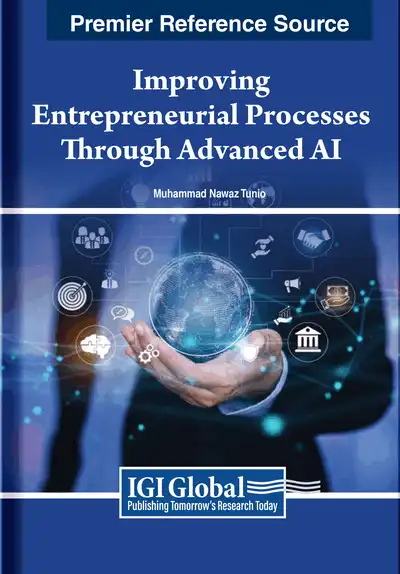
Optimizing Business Models in Entrepreneurship: The Role of AI in Iterative Business Planning
Hewawasam P. G. D. Wijethilaka (University of Colombo, Sri Lanka), Mohit Yadav (O.P. Jindal Global University, India), and Rohit Vij (Lovely Professional University, India)
Source Title: Improving Entrepreneurial Processes Through Advanced AI
DOI: 10.4018/979-8-3693-1495-1.ch004
https://www.igi-global.com/chapter/optimizing-business-models-in-entrepreneurship/360723
Current Special Offers
Abstract
This chapter explores the role of Artificial Intelligence (AI) in optimizing business models through iterative planning. As AI continues to advance, it offers entrepreneurs powerful tools for data-driven decision-making, enhancing customer insights, market segmentation, dynamic pricing, and resource allocation. The chapter examines key AI technologies such as machine learning, natural language processing, and AI-powered simulations, which enable continuous refinement and adaptation of business strategies. It also addresses challenges such as data privacy, AI transparency, potential biases, and the balance between automation and human intuition. Ethical considerations, including the responsible use of AI, are discussed to ensure sustainable innovation. The chapter concludes by exploring future trends, including autonomous decision-making and the democratization of AI, emphasizing its potential to transform business models and drive long-term success.
Improving Entrepreneurial Processes Through Advanced AI presents an invaluable solution to the academic quest for understanding and adapting to digital transformation. Its pages unravel the transformative potential of AI systems, providing fresh insights into the evolving traits of digital entrepreneurs, the role of data, machine learning, and the dynamics of open innovation. It explores the nuances of technology adoption and the resilience of family business in the face of ai-driven entrepreneurship. As scholars seek to navigate this dynamic landscape, the book serves as a compelling resource, offering a roadmap to explore the complex intersection of innovation, technology, and entrepreneurship, and to seize the abundant future possibilities this fusion holds for entrepreneurial ventures.
understanding how these advancing AI systems can address core entrepreneurial challenges and open new horizons of opportunity in the era of digital transformation.
PMAssist: Scaling Product Efficiency using GenAI
Software Product Management (SPM) is a broad discipline that spans technology and business domains, requiring extensive collaboration between development teams and client stakeholders. Product managers are integral throughout the product lifecycle, from ideation to product launch and development to ongoing monitoring and maintenance. Product managers frequently encounter challenging situations that impair their ability to make effective decisions in a data-driven environment. In this paper, we present PMAssist, a product management tool developed using Generative Artificial Intelligence (GenAI) to enhance product management efficiency. PMAssist offers an innovative AI-driven solution to the tedious tasks of document retrieval and report generation. This research provides a GenAI-based tool that product managers can leverage to solve complex, time-consuming, and labor-intensive manual processes involved in product management. Instead, they can focus more on strategic and tactical tasks.
PMAssist: Scaling Product Efficiency using GenAI | IEEE Conference Publication | IEEE Xplore
Evolution of Analytics in Product Management for Data-driven Feature Prioritization | IEEE Conference Publication | IEEE Xplore
Data is the building block for any business. From Product Development to managing the workforce, the reliance on data has powered systems to integrations with multiple data sources. The data-driven approach based on a mix of Master Data and Transactional data can affect a company’s success. This paper talks about Data-Driven Decision Making as a mindset and explores various means of analytics used by organizations to better fuel strategic and business decisions. It also explores the roles of Product Management in an organization and how analytics helps make conscious product strategy choices. A sample survey data highlights various Data Analysis techniques using SPSS Software. This study also delves into the specific issue of Autonomous Analytics, propelled by AI/ML principles, to give a data-driven parallel towards Industry 4.0 and the direction of a manufacturing environment. This paper provides a good study on how Analytics is helping current businesses and also talks about challenges for the future.
Managing AI-First Products: Roles, Skills, Challenges, and Strategies of AI Product Managers | IEEE Journals & Magazine | IEEE Xplore
Artificial Intelligence (AI) is revolutionizing industries, offering significant opportunities for innovation while introducing unique complexities in product management. Despite its transformative potential, research on the distinct responsibilities, challenges, and skills required of AI Product Managers (AI PMs) remains limited, leaving a critical gap in understanding how to effectively manage AI-driven products. This study addresses this gap using a grounded theory approach to analyze the evolving roles of AI PMs and propose strategies for managing the complexities of AI-first product development. Central to this study is the introduction of the AI PM Archetype Persona Framework, which encompasses expanded responsibilities, specific challenges and mitigation strategies, essential skills and competencies, AI product lifecycle management, personality traits, and the application of generative AI tools in product management. These findings provide actionable insights for practitioners and organizations, enabling them to tackle AI challenges, refine product lifecycle strategies, and foster sustainable innovation in an AI-driven market landscape.
Designing a value proposition for a personal finance management product
The goal of this research is to formulate a customer value proposition on the personal finance management market for the further product development. To achieve this goal we perform market and customer research, defining gaps among competitors on the market and evaluating customer needs and pains based on the interviews and aspect-based sentiment analysis of the reviews.
Master_Thesis__2_.pdf
Evolution of Analytics in Product Management for Data-driven Feature Prioritization | IEEE Conference Publication | IEEE Xplore
Data is the building block for any business. From Product Development to managing the workforce, the reliance on data has powered systems to integrations with multiple data sources. The data-driven approach based on a mix of Master Data and Transactional data can affect a company’s success. This paper talks about Data-Driven Decision Making as a mindset and explores various means of analytics used by organizations to better fuel strategic and business decisions. It also explores the roles of Product Management in an organization and how analytics helps make conscious product strategy choices. A sample survey data highlights various Data Analysis techniques using SPSS Software. This study also delves into the specific issue of Autonomous Analytics, propelled by AI/ML principles, to give a data-driven parallel towards Industry 4.0 and the direction of a manufacturing environment. This paper provides a good study on how Analytics is helping current businesses and also talks about challenges for the future.