PhD General Info Literature Review
Tools
Mendeley Google Collab https://colab.research.google.com/drive/1nFkKdW4HNnG9xeA8TUGgABhGcfRQu6mT#scrollTo=elolzk35QSqG Google Drive - Papers Vault - https://drive.google.com/drive/folders/11eCxOHNDZd-g5s4ONTem7losDdS2y_A6?hl=pt-br
Processo:
Anotar vários DOIs, dos que tem pelo menos 5 citações Montar uma análise critica em cima - para aumentar ou diminiur Subir no NotebookLM Fazer a pergunta chave? Fazer a pergunta se tem algo que se conflita?
When i find a result in the searches that is a book or a bibliographic, i send it to corresponding session.
Findings & Insights
Software Product Lines - Adjcent Topics
- Software Product Lines
- Agile - Eg. Toward an Agile Product Management: What Do Product Managers Do in Agile Companies? | SpringerLink
- Is undergoing an productization process or not?
- software customization seria um problema ? ref https://link.springer.com/book/10.1007/978-3-658-14858-4
Inspirations
Log
Next
- Continue with - Introducing “product management” in software development - gscholar - 15.200 resultados resultados
- Lit Review Process
- Confirmar que todas as pesquias que eu usei no meu mestrado estao aqui
- productization?
- Search terms in English to find research on introducing Software Product Management practices in an organization
- Gorschek, T., Gomes, A., Pettersson, A., Torkar, R.: Introduction of a process maturity model for market-driven product management and requirements engineering. J. Softw. Evol. Process 24(1), 83–113 (2012) - As yet another model, the market-driven product management and requirements engineering model (MDREPM) enables software process improvement and process assurance in market-driven software engineering [13]. The model targets the unique challenges that product development organizations operating in market-driven environments are facing and can be seen as both a best-practice guide and a process assessment framework.
- Missing → Study cases?
-
- Rautiainen, K., Lassenius, C., Sulonen, R.: 4CC: a framework for managing software product development. Eng. Manag. J. 14(2), 27–32 (2002) - Finally, the 4CC (Four Cycles of Control) framework combines business management and software product development, and takes both a long-term and short-term view to software product release management [30]. The framework involves the type, timing, and content of different product releases, and aims at providing a common understanding for how to organize software product development.
- Ver O’Reilly
Ciclo → Pesquisa e Seleção Initialk no Database # X - NOITE Ciclo → Leitura e seleção final dos dos artigos selecionados do Database # X - MANHA
Outros frameworks de software product management, deveria estudá-los?
2024-01-16 From XX to YY
- Organized this document and canvas
- Evolved the process (video review/helena paper)
- Covered 3 searches
- Testes NotebookLLM
2025-01-25 From
- Colab - Data from databases
- First database oriented search in specific database (Springer)
- Organized the deck-
Seminal - From previous research
Timo Book? https://link.springer.com/book/10.1007/978-3-030-19871-8
Software product management–An industry evaluation
C Ebert, S Brinkkemper - Journal of Systems and Software, 2014 - Elsevier Salvar Citar Citado por 110 Artigos relacionados Todas as 5 versões
Towards a reference framework for software product management
I Van De Weerd, S Brinkkemper… - … Conference (RE’06), 2006 - ieeexplore.ieee.org Salvar Citar Citado por 189 Artigos relacionados Todas as 14 versões
Software product management (Replaced by New versions?)
SA Fricker - Software for People: Fundamentals, trends and best …, 2012 - Springer
… product manager, and introducing software product management … product management
both for commercial software and for … The SaaS software development model is likely to lead to …
Salvar Citar Citado por 91 Artigos relacionados Todas as 16 versões
On the creation of a reference framework for software product management: Validation and tool support
I Van De Weerd, S Brinkkemper… - … on Software Product …, 2006 - ieeexplore.ieee.org
… software development [10] and project management [37]. In this paper, we aim to develop a
(preliminary) body of knowledge for software product management… products; introducing new …
The impacts of software product management
C Ebert - Journal of systems and software, 2007 - Elsevier
… What are the pre-requisites of good product management? We will summarize in this
chapter lessons learned from introducing product management and relate it to our targets of …
Salvar Citar Citado por 243 Artigos relacionados Todas as 4 versões
[PDF] Software Product Management in Large-Scale Agile
NB Moe, M Berntzen, A Barbala… - … Software Development, 2024 - library.oapen.org 978-3-031-61154-4.pdf
… in an agile development context. This study focuses on product management challenges and
… Introducing and succeeding with SPM takes time because of the many challenges that are …
Salvar Citar Citado por 3 Artigos relacionados Todas as 4 versões
Books
Read this first
Include the index of each book in the MD
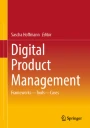
Digital Product Management
Frameworks – Tools – Cases Book@ 2024
-
Concrete and up-to-date tips and tools from versatile experts in digital product management
-
Everything you need to get started and develop your career in digital product management
-
Significantly expanded 2nd edition
The book describes the various areas of digital product management: from vision and strategy development, idea generation and evaluation to actual product development and subsequent performance analysis. The central tasks and touch points are explained from the perspective of the product manager (product owner).
In addition to agile methods and working models, the authors also cover specific tools that can be used to manage the development of digital products successfully.
A book for anyone working in product management, software development, business development or marketing and sales, as well as for interested students.
“The role of a product manager is crucial to the successful development of digital products. This book provides an excellent overview of the most important methods of modern product management.” Stefan Vosskötter, founder and managing director of digitale-leute.de & deutsche-startups.de
“The authors present a variety of methods and tools in a comprehensive and detailed manner, providing the reader with concrete assistance in mastering the challenges of digital product management.” **Cord Grünewald, CPO Kleinanzeigen
**From the content: Introduction to Digital Product Management · User-Centered Product Visions · Product Discovery · Validation of Product Ideas in the Market · Alignment – How to Achieve Good Coordination · Impact-Oriented Product Management with OKR · Product Delivery · Lateral Leadership in Product Management · Product Owner and Scrum Master · Understanding User Experience · Data Analytics · Growth – The Matter of Growth · Holistic Understanding of Product Management · The Agile Transformation of Hanseatic Bank
Software Product Management
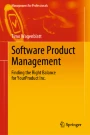
Finding the Right Balance for YourProduct Inc.
- Book
- © 2019
Overview
Authors:
-
Introduces a novel and proven approach to holistic software product management
-
Describes how to leverage and adapt the framework for your day-to-day business activities for your product and context
-
Includes a comprehensive overview for beginners
-
Offers proven practices and innovative concepts for experienced product managers
-
Details how to balance and consistently improve all aspects of software product management towards an aligned product mindset
The Startup Players Handbook

A Roadmap to Building SaaS and Software Companies © 2023
Authors:
-
Explore strategies and tactics to build a sales pipeline and scale that up to a Series B company
-
Gain a working knowledge in disciplines required to grow a company
-
Raise the capital to sustain a company and potentially sell the company in the end
Modern startups are on an assembly line from seed to later-stage series financing. As they make that journey, founders need to have a working knowledge of dozens of fields if they’re going to scale a company. SaaS is a unique set of skills across those disciplines.
This book focuses on gaining a working understanding of what specialists will do in those fields as an organization grows and how founders can leverage the basics to get those capabilities started so once professionals are hired in each, they can hit the ground running with authentic materials. Founders will be pulled in a lot of directions as they find success, so the book looks at what to do with each discipline at each stage of growth.
The hardest part to creating a startup is to just start the thing. This book covers when to bootstrap, apply to accelerators, seek seed capital – and where to do those things. It also covers some of the earlier questions like how to write a mission statement, where to find investors, what technical stacks to use, how to HR, how to sell, and more importantly, when a founder should spend time on each discipline. A way to look at the tech stack and the ever-changing landscape to keep technical debt low and the ability to respond to ever-changing market forces high.
What You’ll Learn
- The nuts and bolts of which type of corporation to found, impacts to taxes, equity, and of course more philosophy.
- Researching, pricing, and planning to take that wonderful innovation to market and expanding into a portfolio.
- Leadership styles—each has its place and so we look at ways to level up that domain
- Management—going beyond inspiration, from those regularly scheduled meetings to helping people grow to task managemen.
- Basic accounting and finance skills with terms and guidance on revenue treatment
Who This Book Is For
People thinking of or starting asoftware/SaaS company. Could be useful for first timers or those on their third startup.
Building Products for the Enterprise
https://www.oreilly.com/library/view/building-products-for/9781492024774/
local: dokumen.pub_building-products-for-the-enterprise-product-management-in-enterprise-software-1nbsped-1492024783-9781492024781.pdf
by Blair Reeves, Benjamin Gaines
Released March 2018
Publisher(s): O’Reilly Media, Inc.
ISBN: 9781492024781
Read it now on the O’Reilly learning platform with a 10-day free trial.
O’Reilly members get unlimited access to books, live events, courses curated by job role, and more from O’Reilly and nearly 200 top publishers.
Buy on Amazon Buy on ebooks.com
Book description
If you’re new to software product management or just want to learn more about it, there’s plenty of advice available—but most of it is geared toward consumer products. Creating high-quality software for the enterprise involves a much different set of challenges. In this practical book, two expert product managers provide straightforward guidance for people looking to join the thriving enterprise market.
Authors Blair Reeves and Benjamin Gaines explain critical differences between enterprise and consumer products, and deliver strategies for overcoming challenges when building for the enterprise. You’ll learn how to cultivate knowledge of your organization, the products you build, and the industry you serve.
Explore why:
- Identifying customer vs user problems is an enterprise project manager’s main challenge
- Effective collaboration requires in-depth knowledge of the organization
- Analyzing data is key to understanding why users buy and retain your product
- Having experience in the industry you’re building products for is valuable
- Product longevity depends on knowing where the industry is headed
Bibliographical Study Papers
A Bibliographical Study of Software Product Management Research
Publisher: IEEE Sami Hyrynsalmi; Arho Suominen; Marko Seppänen Software Product Management (SPM) is a relatively young research area which aims to understand how to productise a software product or a service as well as how to align it with the organisation’s strategy. While the research of an academic discipline of SPM started to emerge as yearly as 1990s, the most impactful works have been published during 2006–2007. To understand how this young field has emerged and developed, this paper presents a bibliometric study on SPM publications found from Scopus (n=142). The identified studies have been produced by a small set of authors and institutions, which are mainly located in Europe. By using Bibliographic Coupling and Co-Citation metrics, the study shows that Software Product Management literature is drawing from several different related fields. Furthermore, the studied literature is tightly interconnected. The study also shows that the SPM field might be lacking a coherent intellectual background and new openings due to scattered research foci. To prevent this development, this work calls for a formation of a shared research agenda for the Software Product Management field. https://ieeexplore.ieee.org/abstract/document/9570214
New Software Product Development: Bibliometric Analysis | Journal of the Knowledge Economy
There’s No Business Like Software Business: Trends in Software Intensive Business Research
https://link.springer.com/chapter/10.1007/978-3-030-33742-1_3
-
Conference paper
-
First Online: 21 October 2019
-
pp 19–27
Part of the book series: Lecture Notes in Business Information Processing ((LNBIP,volume 370))
Included in the following conference series:
-
2058 Accesses
Abstract
Software intensive business research is rapidly evolving. Over the last decade we have witnessed a surge in research output but as the field matures, its future remains unsure. In this paper an overview is provided of the highlights and trends of software intensive business research. We briefly discuss the most cited papers in the domain and provide a hype cycle for software intensive business research. With this paper, we hope that researchers can forge more solid research strategies for themselves in the domain, to achieve longevity, academic depth, and impact.
Springer Nature Database
Selected Databases to be searched
| 0 | link.springer.com | 10940 |
| 1 | ieeexplore.ieee.org | 7350 |
| 2 | sciencedirect.com | 3456 |
| 3 | books.google.com | 2439 |
| 4 | dl.acm.org | 1734 |
| 5 | onlinelibrary.wiley.com | 710 |
| 6 | taylorfrancis.com | 429 |
| 7 | citeseerx.ist.psu.edu | 423 |
| 8 | diva-portal.org | 395 |
| 9 | kilthub.cmu.edu | 362 |
| 10 | academia.edu | 352 |
| 11 | journals.sagepub.com | 332 |
| 12 | tandfonline.com | 296 |
| 13 | pmd.igdp.org.br | 279 |
| 14 | researchgate.net | 179 |
| 15 | picture.iczhiku.com | 137 |
| 16 | pmd.periodikos.com.br | 131 |
| 17 | mdpi.com | 123 |
| 18 | jiem.org | 104 |
| 19 | app.periodikos.com.br | 91 |
| 20 | igi-global.com | 88 |
| 21 | emerald.com | 79 |
| 22 | api.taylorfrancis.com | 74 |
| 23 | fepbl.com | 71 |
| 24 | actapress.com | 71 |
”software product management” 231 results
A comprehensive overview of software product management challenges
The principal focus of software product management is to ensure the economic success of the product, which means to prolong the product life as much as possible with modest expenditures to maximizs profits. Software product managers play an important role in the software development organization while being responsible for the strategy, business case, product roadmap, high-level requirements, product deployment (release-management), and retirement plan. This article explores the problems that affect the software product management process, their perceived frequency and perceived severity. The data were collected by a systematic literature review (5 main databases were analyzed), interviews (10 software product managers from IT companies), and surveys (89 participants). 95 software product management problems assigned nonexclusively to 7 areas were identified. 27 commonly mentioned software product management problems were evaluated for their perceived frequency and perceived severity. The problems perceived as the most frequent are: determining the true value of the product that the customer needs, strategy and priorities change frequently, technical debt, working in silos, and balancing between reactive and proactive work. In total, 95 problems have been identified which have been narrowed down to 27 problems based on their occurrence in at least 3 interviews. These selected problems were prioritized by perceived frequency and perceived severity. Some of the identified problems spanned beyond the software product management process itself, but they all affect the work of software product managers.
https://link.springer.com/content/pdf/10.1007/s10664-022-10134-5.pdf
Strategic Digital Product Management in the Age of AI
local → 978-3-031-53227-6.pdf
-
First Online: 09 February 2024
-
pp 344–359
Part of the book series: Lecture Notes in Business Information Processing ((LNBIP,volume 500))
Included in the following conference series:
The role of software product management is key for building, implementing and managing software products. However, although there is prominent research on software product management (SPM) there are few studies that explore how this role is rapidly changing due to digitalization and digital transformation of the software-intensive industry. In this paper, we study how key trends such as DevOps, data and artificial intelligence (AI), and the emergence of digital ecosystems are rapidly changing current SPM practices. Whereas earlier, product management was concerned with predicting the outcome of development efforts and prioritizing requirements based on these predictions, digital technologies require a shift towards experimental ways-of-working and hypotheses to be tested. To support this change, and to provide guidelines for future SPM practices, we first identify the key challenges that software-intensive embedded systems companies experience with regards to current SPM practices. Second, we present an empirically derived framework for strategic digital product management (SPM4AI) in which we outline what we believe are key practices for SPM in the age of AI.
New Software Product Development: Bibliometric Analysis | Journal of the Knowledge Economy
Will be analyses in the bibliometric study papers section.
Toward an Agile Product Management: What Do Product Managers Do in Agile Companies?
-
Conference paper
-
Open Access
-
First Online: 09 June 2022
-
pp 168–184
You have full access to thisopen accessconference paper
Part of the book series: Lecture Notes in Business Information Processing ((LNBIP,volume 445))
Included in the following conference series:
-
10k Accesses
-
10 Citations
Abstract
The product manager (PM) role is well established in leading technological companies, such as Google, Amazon, Microsoft, and Facebook. PMs are responsible for integrating technical, design, and business perspectives when developing software products and product portfolios. In agile methods (e.g., Scrum), similar responsibilities are linked to the Product Owner (PO) role. In contrast, in large-scale agile, one can find both Product Owners and product managers who sometimes compete. Despite the widespread adoption of the product manager role, the attention toward it in the agile academic community has been surprisingly limited. In this multiple case study, we analyzed 17 interviews with 11 product managers from four agile companies. We found that the PMs facilitated continuous product experimentation and innovation, supported the product teams, and engaged in additional activities to achieve optimal product development. Our summary of the product management activities can guide product managers working in agile companies.
Influence of Software Product Management Maturity on Usage of Artefacts in Agile Software Development
local: wagenaar2017.pdf
-
Conference paper
-
First Online: 28 October 2017
-
pp 19–27
Context: Agile software development (ASD) uses ‘agile’ artefacts such as user stories and product backlogs as well as ‘non-agile’ artefacts, for instance designs and test plans. Rationales for incorporating especially non-agile artefacts by an agile team mainly remain unknown territory. Goal: We start off to explore influences on artefacts usage, and state our research question as: To what extent does maturity relate to the usage of artefacts in ASD in software product organizations? Method: In our multiple case study 14 software product organizations were visited where software product management maturity was rated and their artefacts usage listed. Results: We found maturity to be negatively correlated with the non-agile/all artefacts ratio. In other words, the more mature software product management is, the fewer non-agile artifacts are used in ASD. Conclusions: This suggests that an organizational factor influences an agile team in its artifacts usage, contradictory to the concept of self-organizing agile teams.
?? How they measured maturity?
Strategies for Developing Process Reference Models: An Analysis of Selected Cases from the Product Development and Management Domain
local: 10.1007@978-3-030-29238-6.pdf
-
Conference paper
-
First Online: 08 August 2019
-
pp 207–221

Part of the book series: Communications in Computer and Information Science ((CCIS,volume 1010))
Included in the following conference series:
Reference models available for process assessment and improvement in various domains are often criticized to be too generic or unable to capture industry, domain, or company specific requirements. Although typically a plethora of process reference-like models and other best practice resources are available to potentially close the criticized gaps, companies are reluctant to move towards the implied multi-model-based process management approaches or to customize or extend existing models according their proprietary needs. Approaches and methods to develop, enhance or customize available models or to integrate multiple models are often not satisfactorily understood and far away from being industry practice. The goal of the research underlying this paper is thus to support the development and enhancement of process reference models for complex industry contexts. As a sample domain the area of product development and management in the software and systems engineering domain is used. The paper analyses the development of four industry-driven model development cases to identify their model development contexts and goals as well as development strategies, approaches, and related rationales. The aim of the paper is to contribute to the understanding of how process reference models are developed and how they can be enhanced or adapted to broader and more complex contexts in order to deliver value and competitive advantage to the respective businesses.
Enterprise Product Management in the Digital World
https://link.springer.com/chapter/10.1007/978-3-030-01659-3_13 (local nikolova2019.pdf)
- Conference paper
- First Online: 09 January 2019
- pp 95–102
- Cite this conference paper

In the digital era, businesses in any industry are being transformed fundamentally to stay competitive. Innovation is increasingly shaped by changes in technology, development methodologies, and the ways in which consumers make purchase decisions, demanding changes throughout the entire lifecycle of a digital product. The lifecycle of digital products becomes more and more complex with the need to embrace new business models for creative businesses, including the increasing role of business networks and collaboration to offer related products and services. Product management in the digital world is thus transformed to include data-driven decision making, collaborative ownership, incremental thinking, and continuous learning.
The Strategic Role of Software Customization
Managing Customization-Enabled Software Product Development
- Book
- © 2016
Overview
Authors:
-
Publication in the field of economic sciences
-
Includes supplementary material: sn.pub/extras
-
4614 Accesses
Matthias Bertram aims to develop a deeper understanding of software customization and its strategic role for software product management. Drawing on the conceptual foundation of the resource-based view of the firm, such as resources, capabilities, and dynamic capabilities, the author conducts two qualitative investigations: the first within vendor and customer firms to develop an in-depth understanding of the value of software customization as well as the vendor resources and capabilities necessary to successfully provide software customization and the second on the vendor’s dynamic capabilities necessary to generate temporary competitive advantage from software customization in product management activities.
- Introduction: The neglected role of customization for software product management
- Literature review: Software customization in the information systems literature
- Theoretical foundation: The resource-based view (RBV) of the firm
- Qualitative investigation I: Exploring software customization from the vendors’ and customers’ perspectives
- Qualitative investigation II: Elaborating the strategic role of customization for software product development
- Conclusion: Summary, contributions and implications, limitations and outlook
The Preliminary Results from the Software Product Management State-of-Practice Survey
local: ICSOB2014CR.pdf
-
Conference paper
-
pp 295–300

Part of the book series: Lecture Notes in Business Information Processing ((LNBIP,volume 182))
Included in the following conference series:
-
2660 Accesses
Abstract
Software product management (SPM) as a discipline includes many practices like product and release planning, market analysis, roadmapping, and product lifecycle management. Product management frameworks prescribe these practices but companies seldom adopt all of them. We conducted a state-of-practice survey with the aim to investigate how companies adopt SPM practices and how this practical experience fits together with the framework suggested by International Software Product Management Association (ISPMA). The results of this study showed that ISPMA SPM Framework describes core product management practices well but the impact of product management practices to the final product success remains ambiguous.
Productization: Transforming from Developing Customer-Specific Software to Product Software
local: artz2010.pdf
-
Conference paper
-
pp 90–102
Part of the book series: Lecture Notes in Business Information Processing ((LNBIP,volume 51))
Included in the following conference series:
-
2142 Accesses
Abstract
Developing product software is getting increasing attention from both academics and practitioners. Organizations are recognizing the benefits and importance of developing a product for a market. Also, several software companies that develop customer-specific software have identified a need to change to developing and selling product software. Since few studies are available in this domain, it is difficult for organizations to handle such a transformation. In this research, we introduce the productization process that describes the transformation from developing customer-specific software to product software.
A Framework for Process Improvement in Software Product Management
https://link.springer.com/chapter/10.1007/978-3-642-15666-3_1 local: bekkers2010.pdf
-
Conference paper
-
pp 1–12
Part of the book series: Communications in Computer and Information Science ((CCIS,volume 99))
Included in the following conference series:
-
1611 Accesses
-
26 Citations
Abstract
This paper presents a comprehensive overview of all the important areas within Software Product Management (SPM). The overview has been created and validated in collaboration with many experts from practice and the scientific community. It provides a list of 68 capabilities a product software organization should implement to reach a full grown SPM maturity. The overview consists of the SPM Competence Model that shows the areas of importance to SPM, and the SPM Maturity Matrix that lists all important activities within those areas in a best practice implementation order. SPM organizations can use this matrix to map and improve their SPM practices incrementally.
Developing a Maturity Matrix for Software Product Management
https://link.springer.com/chapter/10.1007/978-3-642-13633-7_7 Local: vandeweerd2010.pdf
-
Conference paper
-
pp 76–89
Part of the book series: Lecture Notes in Business Information Processing ((LNBIP,volume 51))
Included in the following conference series:
-
2161 Accesses
Abstract
The quality of processes in Software Product Management (SPM) has a high impact on the success of a software product, as it improves product quality and prevents release delays. To improve the SPM practice, we propose the maturity matrix for SPM, a focus area oriented maturity model concentrating on the SPM functions Requirements Management, Release Planning, Product Roadmapping, and Portfolio Management. In this paper, we describe the development of the SPM maturity matrix, consisting of (a) identification and description of capabilities, (b) positioning the capabilities at the right levels in the maturity matrix and (c) validating the maturity matrix with expert validation and a survey among 45 product managers and product management experts. The result is a validated maturity matrix that will guide further development of methodical support in SPM.
Adjusting to Increasing Product Management Problems: Challenges and Improvement Proposals in One Software Company
https://link.springer.com/chapter/10.1007/978-3-642-37422-7_28
-
Conference paper
-
pp 386–400

Part of the book series: Lecture Notes in Computer Science ((LNPSE,volume 7830))
Included in the following conference series:
-
International Working Conference on Requirements Engineering: Foundation for Software Quality
-
2414 Accesses
Abstract
[Context and motivation] This paper seeks to understand the essential product management challenges that one software product company has recently started to face. [Question/problem] The paper illustrates how the case company, Maestro, has been forced to adjust its management style due to the increasingly complex and turbulent business environment. The paper further illustrates how the evolving management style has affected the way product requirements are managed. [Principal ideas/results] The comparison of our results with existing product management literature suggests that traditional product management approaches are becoming increasingly inadequate to deal with growing amounts of interpretations, requirements interdependencies and market turbulence**. [Contribution]** The findings of this paper indicate a need for examining literature from management and organizational sciences in order to expand the traditional view of requirements models as static and purely design-time entities towards new kinds of approaches that are more effective in dealing with complexity and turbulence. The paper eventually results with an identification of research gaps and important topics for future research.
A Framework for Strategic Positioning of IT-Products
https://link.springer.com/chapter/10.1007/978-3-642-39336-5_11
-
Conference paper
-
pp 102–116
Part of the book series: Lecture Notes in Business Information Processing ((LNBIP,volume 150))
Included in the following conference series:
-
2337 Accesses
Abstract
IT Products are viewed and managed differently depending on the perspectives and the stage within the life cycle. A model is presented that integrates different perspectives and stages serving as an aid for the analysis of business models and focused positioning of IT-products. Four generic business models are analysed with regard to the product management function in general and the positioning field for IT-products specifically: off-the-shelf (license), license plus service, project, and system service (incl. cloud computing).
Transforming to Product Software: The Evolution of Software Product Management Processes during the Stages of Productization
https://link.springer.com/chapter/10.1007/978-3-642-30746-1_4 local: leenen.pdf
- Conference paper
- pp 40–54
- Cite this conference paper
Part of the book series: Lecture Notes in Business Information Processing ((LNBIP,volume 114))
Included in the following conference series:
-
2392 Accesses
Abstract
Within the software industry, one can recognize a strong trend towards productization, which is the transformation process from customer-specific software to a standard product. Organizations that originally focussed on building custom software regularly reorient towards a market. In order to grow into a mature product software company, an organization has to introduce and adapt its software product management processes. This paper presents a case study on how software product management processes evolve during the stages of productization at a small software company. We identify productization stages at the case company and describe the situational factors and implemented software product management capabilities during those stages. The paper provides a validation of the productization model, and insight into the development of SPM processes in relation to the productization stages.
Extending ISO/IEC 12207 with Software Product Management: A Process Reference Model Proposal
https://link.springer.com/chapter/10.1007/978-3-642-30439-2_9
-
Conference paper
-
pp 93–106
Part of the book series: Communications in Computer and Information Science ((CCIS,volume 290))
Included in the following conference series:
Abstract
Software product management is generally expected to link and integrate business and product related goals with core software engineering and software life cycle activities. Empirical research demonstrates the positive effect of mature software product management practices on key software development performance indicators. Nevertheless, the various frameworks available for software product management have distinct and diverse focus points, are often linked or incorporated with specific development paradigms, or lack integration with or addressing of core software engineering activities. On the other hand, traditional software process improvement approaches generally lack the provision of explicit or detailed software product management activities. – In this paper we build on the results of preceding research on identifying a lack of software product management practices within ISO/IEC 12207 and on deriving key outcomes of software product management activities from selected software product management frameworks. Based on these results we propose a process reference model for software product management that can be integrated with the process reference model as defined in ISO/IEC 12207 for software life cycle processes.
Introduction of Software Product Management at Wincor Nixdorf: Challenges and Lessons Learned
-
Chapter
-
First Online: 01 January 2012
-
pp 201–215
 Software for People
Part of the book series: Management for Professionals ((MANAGPROF))
- 3373 Accesses
Abstract
The importance of product management in the software industry is widely recognized and empirically validated. Despite its importance, the maturity level of software product management in companies is low, many companies struggle with the challenge of introducing product management. This paper describes a real-world industry experience report of a product management introduction project in a banking and retail IT Solutions Company. We illustrate the initial situation before the product management introduction project, the approach that has been pursued within the project, the challenges of the first year and the experiences that have been made.
Comparison of Software Product Management Practices in SMEs and Large Enterprises
-
Conference paper
-
pp 15–26
Part of the book series: Lecture Notes in Business Information Processing ((LNBIP,volume 114))
Included in the following conference series:
-
2365 Accesses
Abstract
The aim of this interpretive qualitative study was to understand how software product management (SPM) activities differ in SMEs (small and medium-sized enterprises) and in large enterprises (LEs). We studied thirteen software organizations representing various types of software products and analyzed the collected data by applying the grounded theory method. As a result, we summarized the observations, explaining the main differences between SMEs and LEs and identified SPM activities that are size-dependent, size-independent, and specific for SMEs and LEs only. Our results indicate that the company size affects goals and activities of SPM. Therefore, companies of different size require different approaches in the adoption of SPM activities.
Software Product Management and Agile Software Development: Conflicts and Solutions
-
Chapter
-
First Online: 01 January 2012
-
pp 83–96
Part of the book series: Management for Professionals ((MANAGPROF))
-
3833 Accesses
Abstract
Agile software development has been established over the last 15 years as a popular development approach. In a time when speed of change is of utmost importance, agile approaches are often the most appropriate roads to success. They do not only change the way development is performed, but they also impact other parties involved in development projects, in particular the software product manager. Software companies are faced with the question how software product management and agile development can work together in an optimal way. Who is responsible for requirements? Is the software product manager automatically the designated “product owner” (Scrum)? Or is “product owner” a new and separate role? Does he/she replace the software product manager?
The Software Product Management Framework which has been developed by the International Software Product Management Association (ISPMA e.V., www.ispma.org) provides orientation. It can be used as a helpful tool to make the change process towards agile development successful.
Framework for Implementing Product Portfolio Management in Software Business
-
Chapter
-
First Online: 01 January 2014
-
pp 193–221
-
4436 Accesses
Abstract
Whether a software product company takes up a project depends on the strategic decisions that are made with regard to an organization’s products. A software project needs to fit strategic goals and enable an organization to realize a vision through its software products. Making decisions on a strategic level, however, requires information of several related topics including technological trends and the product’s life cycle and surpasses the scope of an individual software project. Instead, these decisions are made on the level of the product portfolio. Product Portfolio Management (PPM) holds that an organization has to manage investment decisions over time following profit and risk criteria. Given the multitude of relevant topics and the interrelatedness between these topics, it has proven difficult to implement PPM processes in software businesses. To this end, we created the Portfolio Implementation Framework (PIF) consisting of (a) a competence model, giving an overview of the critical topics; (b) process-deliverable diagrams, which provide an implementation path for product portfolio management processes; and (c) a maturity matrix that comprises 32 capabilities, which should be realized during implementation. The maturity matrix also serves as an instrument for industry to assess, compare and improve portfolio management processes across organizations. The framework provides a holistic view on a step-by-step PPM process implementation and has proved its applicability in practice.
Productization of an IT Service Firm
-
Conference paper
-
pp 115–131
Part of the book series: Lecture Notes in Business Information Processing ((LNBIP,volume 182))
Included in the following conference series:
-
2715 Accesses
Abstract
Two types of businesses dominate the landscape of the IT industry: service businesses that develop tailor-made software based on customer specific needs on the one hand, and software businesses that develop standard software products based on market needs on the other hand. The so-called productization process enables software companies to perform a business transformation from customer specific service-driven to a product business. This research aims to evaluate to what extent the proposed productization process is applicable in a service-oriented company using seven theory-testing case studies within the context of one IT service firm. The results indicate that the productization process cannot be applied to its full extent, since most of the product-driven processes are not mature, which is largely caused by a lack of knowledge about the productization process in service firms.
The Preliminary Results from the Software Product Management State-of-Practice Survey
-
Conference paper
-
pp 295–300
Part of the book series: Lecture Notes in Business Information Processing ((LNBIP,volume 182))
Included in the following conference series:
-
2660 Accesses
Abstract
Software product management (SPM) as a discipline includes many practices like product and release planning, market analysis, roadmapping, and product lifecycle management. Product management frameworks prescribe these practices but companies seldom adopt all of them. We conducted a state-of-practice survey with the aim to investigate how companies adopt SPM practices and how this practical experience fits together with the framework suggested by International Software Product Management Association (ISPMA). The results of this study showed that ISPMA SPM Framework describes core product management practices well but the impact of product management practices to the final product success remains ambiguous.
The Strategic Role of Software Customization
Managing Customization-Enabled Software Product Development
- Book
- © 2016
Overview
Authors:
-
Publication in the field of economic sciences
-
Includes supplementary material: sn.pub/extras
-
4614 Accesses
This is a preview of subscription content, log in via an institution to check access.
About this book
Matthias Bertram aims to develop a deeper understanding of software customization and its strategic role for software product management. Drawing on the conceptual foundation of the resource-based view of the firm, such as resources, capabilities, and dynamic capabilities, the author conducts two qualitative investigations: the first within vendor and customer firms to develop an in-depth understanding of the value of software customization as well as the vendor resources and capabilities necessary to successfully provide software customization and the second on the vendor’s dynamic capabilities necessary to generate temporary competitive advantage from software customization in product management activities.
Google Scholar
”software product management introduction” - gscholar - 10 resultados (0,16 s)
Implementing Software Product ManagemIntroducing “product management” in software development - gscholar - 15.200 resultados resultadosent During The Productization Process
Salvar Citar Artigos relacionados Todas as 2 versões [PDF] hnu.edu.cn
H:\My Drive\02.04 Education_PapersVault\Implementing Software Product Management During The Productization Process.pdf
JHC Hooft - 2013 - studenttheses.uu.nl Currently there are software vendors that want to move form customer specific software to a standard software product. A software product can be governed by software product management (SPM) and the productization process describes the process a software vendor undergoes to change from customer specific software to a standard software product. Currently the SPM capabilities are not linked to a stage of the productization process. This exploratory research links the SPM capabilities to a stage of the productization process, identifies the investments in terms of working days that are related to a SPM capability and identifies change aspects that should be considered for the implementation of SPM during the productization process. The results of this research are an overview of the SPM capabilities implemented at the case company during each stage of the productization process and the investments in terms of working days related to these SPM capabilities. A preliminary framework is created that links the SPM capabilities to a stage of the productization process. And lastly a set of guidelines is identified from literature that indicates the aspects of change that should be considered for the implementation of SPM during the productization process. … The lack of guidelines in terms of investments, SPM capabilities to be implemented and change aspects for moving to the next stage in the productization process as described in section 1 leads to the following research question: RQ: When should software product management capabilities be implemented in the productization process and what chance aspects and investment are needed to implement these capabilities?
To answer the research question the following four sub questions will be answered:
SQ1. What is Software Product Management and productization? SQ2. Which SPM capability can be linked to which productization stage? SQ3. What are the investments associated with these SPM capabilities? SQ4. Which aspects of process change and which success factors should be considered for the introduction of SPM during the productization process?
Software product management–An industry evaluation
C Ebert, S Brinkkemper - Journal of Systems and Software, 2014 - Elsevier
Product management is a key success factor for software products as it spans the entire life-cycle and thus ensures both a technical and business perspective. With its many interfaces … Salvar Citar Citado por 110 Artigos relacionados Todas as 5 versões
[PDF] Improving software product management processes: a detailed view of the product software knowledge infrastructure
Improving_Software_Product_Management_Pr.pdf
K Vlaanderen, I Van De Weerd… - Utrecht, The …, 2010 - academia.edu
abstract Nowadays, a huge amount of software is being developed worldwide. Mainly among SMEs (small-to-medium enterprises), there are a lot of companies that focus on the development of product software. In order to manage software products effectively, implementing software product management processes in the organization is essential. Unfortunately, hardly any schooling is available in the area of SPM. In this thesis, a beginning will be made with the elaboration of a product software knowledge infrastructure (PSKI) that should help companies improve their product management process using method increments. The foundation for this elaboration lies in data about the current state of SPM, gathered from six product software companies. Also, two techniques will be elaborated that are a fundamental part of the PSKI. In addition to this, a core aspect of the PSKI is elaborated in a proof-of-concept. Combined, these deliverables form a strong basis for further research.
Salvar Citar Citado por 5 Artigos relacionados Todas as 6 versões
Transforming to product software: the evolution of software product management processes during the stages of productization
W Leenen, K Vlaanderen, I Van De Weerd… - Software Business: Third …, 2012 - Springer
… In order to manage this effectively, implementing software product management processes
in the organization is essential [7,6]. In both the software industry and scientific research, …
Salvar Citar Citado por 11 Artigos relacionados Todas as 9 versões
Abstract. Within the software industry, one can recognize a strong trend towards productization, which is the transformation process from customer-specific software to a standard product. Organizations that originally focussed on building custom software regularly reorient towards a market. In order to grow into a mature product software company, an organization has to introduce and adapt its software product management processes. This paper presents a case study on how software product management processes evolve during the stages of productization at a small software company. We identify productization stages at the case company and describe the situational factors and implemented software product management capabilities during those stages. The paper provides a validation of the productization model, and insight into the development of SPM processes in relation to the productization stages.
Model-driven assessment in software product management
K Vlaanderen, I van de Weerd… - … Workshop on Software …, 2010 - ieeexplore.ieee.org
The maturity of Software Product Management (SPM) in software companies is generally low. In order to enhance the overall maturity of SPM in the industry, we are developing a Knowledge infrastructure that helps product managers in increasing their knowledge of the field and improving the SPM processes in their organization. An important part of this infrastructure is the assessment of a company’s current situation. This paper presents a novel approach to assessing a company’s SPM processes, by deducing its maturity based on process-deliverable diagrams. The approach is implemented using MetaCase’s MetaEdit+, and evaluated in seven cases.
Salvar Citar Citado por 9 Artigos relacionados Todas as 4 versões
[PDF] Model-Driven Assessment: Employing Process-Deliverable Diagrams Maturity Assessment in Software Product Management (DUP with the last?)
Model_Driven_Assessment_in_Software_Prod.pdf
K Vlaanderen, I van de Weerd, S Brinkkemper - academia.edu
The maturity of software companies in the area of Software Product Management (SPM) is
generally low. In order to enhance the overall maturity of SPM in industry, we are developing …
Salvar Citar Artigos relacionados
A comprehensive overview of software product management challenges
O Springer, J Miler - Empirical Software Engineering, 2022 - Springer s10664-022-10134-5.pdf
… There have already been many successful organizations implementing software product management (such as Microsoft, IBM, and Google). The role of the software product manager is …
Salvar Citar Citado por 36 Artigos relacionados Todas as 5 versões
Best practices for and benefits from implementing ISPMA’s SPM framework
A Paajoki - 2020 - jyx.jyu.fi URN_NBN_fi_jyu-202009145848.pdf
… This study investigated the best practices for and benefits from implementing software
product management processes based on the ISPMA’s SPM framework via a mixed-methods …
Salvar Citar Citado por 4 Artigos relacionados
[PDF] Problem Areas Encountered in Creating Valuable Smartphone Software A Software Product Management Case Study
J Leonard, A Kjölstad Svedu - 2014 - lup.lub.lu.se 262_KjAPlstad_Leonard_Problem_Areas_in_Creating_Valuable_Smartphone_Software.pdf
Problem Areas in Creating Valuable Smartphone Software Page 1 Problem Areas in
Creating Valuable Smartphone Software A Software Product Management Case Study Anna …
Salvar Citar Artigos relacionados
[PDF] Problem Areas in Creating Valuable Smartphone Software– A
AK Svedu, J Leonard - Information and Software Technology - Citeseer
Problem Areas in Creating Valuable Smartphone Software Page 1 Problem Areas in
Creating Valuable Smartphone Software A Software Product Management Case Study Anna …
Salvar Citar Artigos relacionados Todas as 2 versões
”Introducing product management in software development” - gscholar - 0 resultados
Introducing product management in software development - gscholar - 1.100.000 resultados resultados
PhD Literature Review Raw Conclusions here → Achei muito amplo os resultados, e documentei alguns achados no mapa.
Introducing “product management” in software development - gscholar - 15.200 resultados resultados
Introducing an agile process to an organization [software development]
M Cohn, D Ford - Computer, 2003 - ieeexplore.ieee.org
… The software engineering group had to guess priorities from the product management
group’s threeto four-month task lists. Once the software engineering group was accustomed to …
Salvar Citar Citado por 409 Artigos relacionados Todas as 13 versões
[Potential side effect ?] Good number of citations
[LIVRO] Software Product Management
T Wagenblatt - 2019 - Springer … always must keep in mind that software development is substantially different from production. … Well, the same answers apply as before when introducing Software Product Management. … Salvar Citar Citado por 16 Artigos relacionados Todas as 6 versões
| Software Product Management: Finding the Right Balance for YourProduct Inc. | |
| Por Timo Wagenblatt |
Tem case studies - pode ser uma referência
[PDF] Software Product Management in Large-Scale Agile
NB Moe, M Berntzen, A Barbala… - … Software Development, 2024 - library.oapen.org
… in an agile development context. This study focuses on product management challenges and … Introducing and succeeding with SPM takes time because of the many challenges that are …
Salvar Citar Citado por 3 Artigos relacionados Todas as 4 versões
==This study focuses on product management challenges and configurations in a Nordic fintech organization with 10,000 employees==
The agile requirements refinery: Applying SCRUM principles to software product management
K Vlaanderen, S Jansen, S Brinkkemper… - Information and software …, 2011 - Elsevier
… software product management and software development, by switching from a focus on
SPM to a focus on software development … ==of introducing agile SPM in an agile development …==
Salvar Citar Citado por 331 Artigos relacionados Todas as 14 versões
”Implementing software product management” - 2.460.000 resultados
Implementing software product management - 2.460.000 resultados
Adopting product management practices
Building a product management organization”
Product management maturity model
Product management transformation
Search terms in English to find research on introducing Software Product Management practices in an organization:
Here are some search terms you can use to find relevant research:
General terms:
- “Implementing software product management”
- “Introducing product management in software development”
- “Adopting product management practices”
- “Building a product management organization”
- “Product management maturity model”
- “Product management transformation”
More specific terms:
- “Product management for agile development”
- “Product management in startups”
- “Product management in large organizations”
- “Challenges of implementing product management”
- “Benefits of product management”
- “Measuring product management success”
- “Product management case studies”
Keywords related to specific aspects:
- Discovery: “Product discovery process,” “user research,” “market analysis,” “opportunity assessment”
- Strategy: “Product vision,” “product roadmap,” “product strategy,” “prioritization frameworks”
- Delivery: “Agile methodologies,” “sprint planning,” “release management,” “product backlog”
- Metrics: “Product KPIs,” “customer satisfaction,” “engagement metrics,” “revenue growth”
Tips for effective searching:
- Combine different terms: Use a combination of general and specific terms to narrow down your search.
- Use quotation marks: Enclose phrases in quotation marks to search for exact matches.
- Use Boolean operators: Use operators like AND, OR, and NOT to refine your search.
- Use wildcards: Use an asterisk (*) to search for variations of a word.
- Try different search engines: Google Scholar, IEEE Xplore, and ACM Digital Library are good sources for academic research.
Examples of complete search queries:
- “Implementing product management in agile software development”
- “Challenges of introducing product management in a startup”
- “Benefits of product management measured by customer satisfaction”
- “Product management case studies in large organizations”
- “Product discovery process for software products”
By using these search terms and tips, you should be able to find relevant research on how to introduce Software Product Management practices in an organization.